
eSIM VS. PHYSICAL SIM: WHICH IS TRULY SAFER FOR YOUR PHONE AND DIGITAL IDENTITY?
Category: Tech News | Reading time: ~8 minutes | Level: All users
Most people ignore that tiny piece of plastic. However, switching to a digital eSIM shuts down major security vulnerabilities and protects your personal data.
For international travelers and privacy-conscious users, choosing between these two formats is no longer just about convenience. Your choice directly alters your device’s security perimeter, data privacy limits, and susceptibility to local cellular intercept threats.
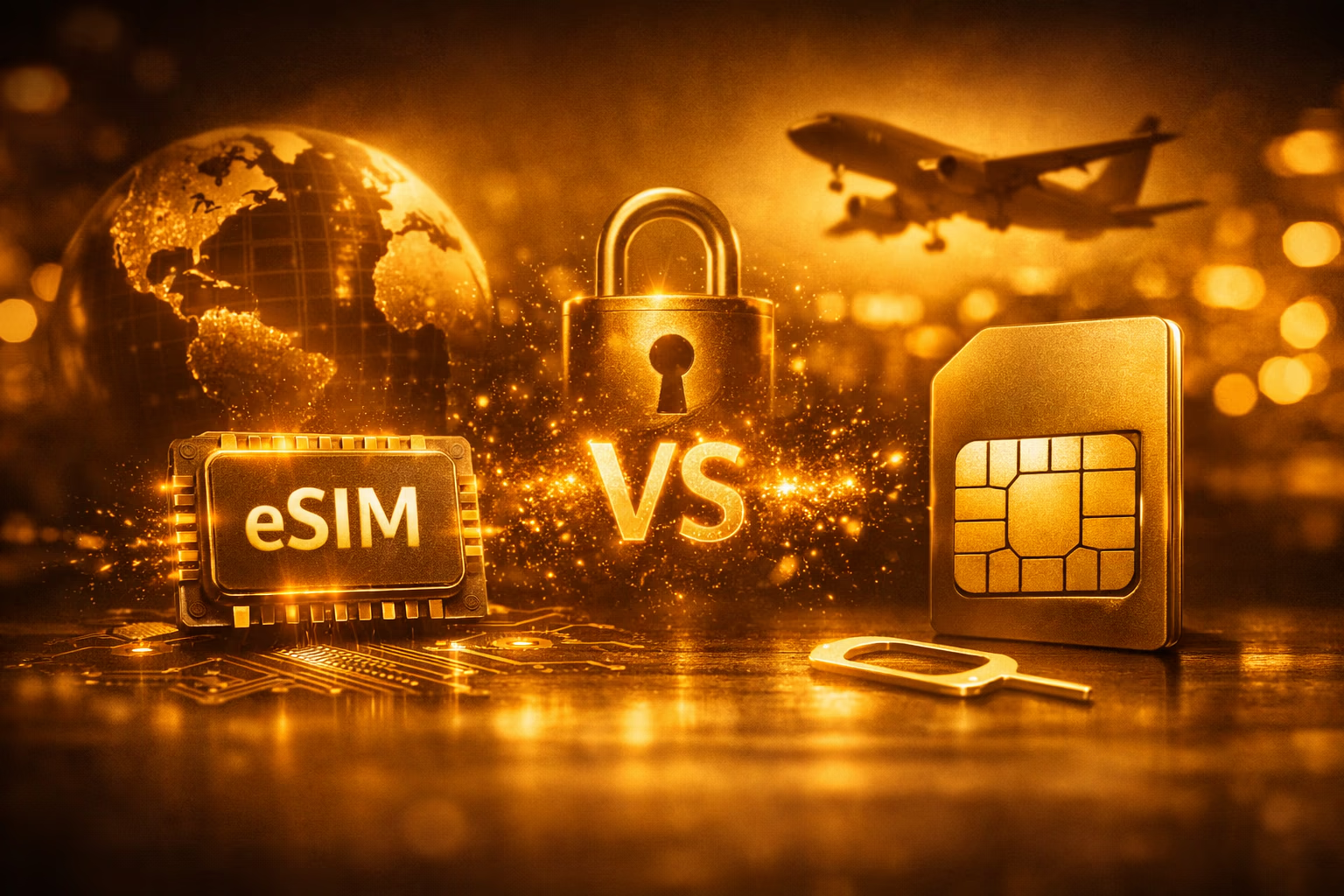
BELOW IS A DETAILED BREAKDOWN OF THE FIVE CRITICAL DIMENSIONS COMPARING ESIMS AND PHYSICAL SIM CARDS FOR TRAVEL AND SECURITY.
1. PHYSICAL THEFT AND DEVICE LOSS PROTECTION
If an attacker physically compromises your mobile hardware, the mechanism anchoring your cellular profile determines how much control you retain over your accounts.
- No Physical Extraction: A physical SIM card can be popped out using a simple paperclip in less than three seconds. This allows a thief to instantly insert your card into a burner phone and hijack your cellular identity.
- Device Lock Synchronization: An eSIM is hardwired directly onto your device’s motherboard. It cannot be physically extracted, isolated, or transferred to another phone without passing your primary passcode or biometric security layers.
- Immediate Remote Disabling: If a smartphone containing an eSIM is stolen, the carrier profile remains trapped inside the locked environment. This allows you to retain remote monitoring connections via tracking networks like Apple’s “Find My” or Google’s “Find My Device.”
- Retained Tracking Persistence: Thieves routinely eject physical SIMs immediately after a snatch-and-grab to take the target device offline. Because an eSIM cannot be ripped out, the phone stays connected to cellular towers longer, maximizing your window to locate or remote-wipe it.
2. ELIMINATION OF SIM SWAPPING VULNERABILITIES
SIM swapping occurs when a cybercriminal manipulates carrier support staff into porting your mobile number over to an attacker-controlled piece of hardware.
- Digital Security Handshakes: Physical SIM profiles rely on legacy carrier databases that allow support representatives to easily clone your profile onto a blank piece of plastic over the phone.
- QR Code and App Verification: Activating an eSIM requires a strict digital authentication loop. This process typically demands a unique QR code tied to a verified account login or a direct push confirmation from within an authenticated carrier application.
- Removal of Insider Threats: Because eSIM provisioning is heavily automated and cryptographically signed, it minimizes the risk of rogue carrier store employees executing unauthorized internal transfers.
- Hardened Two-Factor Anchor: Since your travel number is securely tied to an eSIM, it creates a much tougher target for hackers trying to intercept SMS-based confirmation tokens or financial login codes while you are out of the country.
3. LOCAL SURVEILLANCE AND DATA PRIVACY CONTROLS
Connecting to regional infrastructure in foreign jurisdictions introduces severe telemetry tracking risks and local government surveillance concerns.
- Disposable Single-Use Profiles: Pre-paid local physical SIM cards often require you to surrender your physical passport for scanning at an airport desk, leaving a paper trail of your biometric data in a local database.
- Anonymized Data Routing: Many international travel eSIM providers act as data-only MVNOs (Mobile Virtual Network Operators). This allows you to purchase localized cellular data bundles using a temporary email address or secure digital payment methods like Apple Pay.
- Data-Only Profile Hardening: Travel eSIMs rarely include a traditional public phone number. By restricting your travel profile strictly to data, you prevent local advertising networks from tracking your geographic movements via telephony identifiers.
- Isolation of Your Home Identity: Using a data-only eSIM allows you to safely toggle off your primary home SIM’s cellular data roaming entirely. This shields your main, personal phone number from broadcasting active location tracking pings over foreign networks.
4. OVER-THE-AIR (OTA) PROVISIONING SECURITY
The method used to buy and activate a cellular profile over the internet introduces a unique set of cryptographic encryption advantages.
- Encrypted Digital Delivery: Physical SIM cards must pass through a physical supply chain, exposing them to potential shipping intercept threats or hardware tampering before they ever reach your hands.
- GSMA Cryptographic Standards: eSIM profiles are deployed over the air using secure, global GSMA encryption blueprints. The profile is encrypted specifically for your device’s unique hardware identifier (EID) during the download phase.
- Zero Malicious Hardware Risks: Cybercriminals have previously engineered physical “SIM-overlay” stickers designed to spy on data packets. Switching to an eSIM completely eliminates the risk of introducing compromised physical components into your phone’s card slot.
- Safe Remote Deployment: You can safely research, buy, and download an encrypted eSIM profile from a trusted developer platform while connected to a secure home network before your plane even touches down in a foreign country.
5. MULTI-NETWORK REDUNDANCY AND OPERATIONAL FLEXIBILITY
Maintaining continuous, high-speed connectivity is an essential security layer when navigating unfamiliar international destinations.
- Multi-Profile Storage Capacity: Modern flagship smartphones can store up to eight distinct eSIM profiles simultaneously inside the device memory, allowing you to instantly switch active profiles at will.
- Simultaneous Dual-Network Activity: Dual-SIM technology lets you keep your home line active exclusively for emergency text alerts, while using a secondary local eSIM to run cheap navigation maps and communication data.
- Instant Carrier Hopping: If a specific local network experiences a regional outage, an eSIM user can jump to a different digital carrier option right from their settings menu without needing to find a local retail store.
- Zero Wear-and-Tear Degradation: Physical SIM trays contain delicate pins that can warp, get dirty, or break during transit. An eSIM has no moving hardware parts, ensuring your connection will not randomly fail due to physical dust or moisture exposure.
Securing Your Next Destination
For the modern traveler, the eSIM emerges as the clear winner for digital security and convenience. It effectively removes physical entry points for hardware theft, insulates your personal information from local tracking loops, and keeps your location tracking secure if your device is misplaced. Before your next international flight, make sure your phone is completely carrier-unlocked so you can take full advantage of this secure architecture. If you found this guide helpful, make sure to bookmark our site and check back frequently!
We update our Tech News feed regularly with practical, easy-to-understand tutorials, cybersecurity alerts, and device optimization guides designed to keep your digital life safe and running at peak performance. Thanks!
Nice Post
Good post
Thanks
Which theme do you use for your Blog