
HOW TO SAFELY TEST WOOCOMMERCE CHECKOUT WITHOUT ANY RISK
Category: E-Commerce Security & Web Development | Reading time: ~10 minutes | Level: All online-store owners
Analyze the hidden mechanics behind every transaction flow, evaluate stealth checkout pipelines and uncover unseen validation gaps, deploy robust verification controls to secure your payment process, and do it all without disrupting your live customer experience. Many everyday store owners and business professionals launch their e-commerce sites expecting an absolute influx of sales, only to find targeted user drops, abandoned carts, and unauthorized gateway errors tracking their analytics dashboards.
THE SECRET TO SMOOTH CHECKOUTS: MASTERING TRANSACTION FLOW
Upgrading your marketing strategies without understanding the deep technical gap between a secure, active checkout funnel and an invasive public data failure means leaving your store’s primary revenue pipeline exposed to silent system errors. This guide changes that. By the end, you will understand the deep structural differences between a standard sandbox environment and a live-production credential verification, how generic system notifications can mislead users, and — most importantly — the specific digital tools and configurations required to check and secure your transaction pipelines completely.
WHAT YOU WILL LEARN IN THIS GUIDE:
- THE TRANSACTION PIPELINE: How WooCommerce database structures quietly route customer information to build secure processing tokens.
- SILENT FAILURES AND EXPLOITS: Dissecting checkout friction and visual payment bottlenecks operating behind basic cart pages.
- CENTRALIZED AUDITING BENCHMARKS: Analyzing industry-standard verification steps like live minor-value processing side-by-side.
- REAL-WORLD LOCKDOWN STRATEGIES: Correctly configuring hidden test products, automated customer emails, and webhooks to match your specific operation.
1. THE TRANSACTION PIPELINE: MASTERING PAYMENT GATEWAY CONNECTIONS
To protect your digital revenue, you must first understand how an enterprise-grade checkout security failure transforms into an immediate threat to your business. Most store owners assume their gateway integration functions perfectly simply because a plugin is installed and marked active. While basic installation is straightforward, the vast majority of cart abandonment issues stem from unexpected backend API disconnects.
When a checkout transaction is initiated, the WooCommerce database processes raw order data, mapping item variables, sales taxes, and customer addresses into unified string formats. This string enters an active formatting pipeline, where security modules convert delicate credit card fields into encrypted, randomized tokens before passing them to third-party endpoints. Once sent, this structural handshake requires immediate, accurate verification loops. If your webhook receiver endpoints are unaligned or blocked by localized security firewalls, the transaction stalls out. Your single checkout event on an otherwise high-performing web application suddenly becomes a permanent entry in a broken error log archive, leaving customers staring at an infinite loading spinner.

2. SILENT FAILURES AND EXPLOITS: HOW YOUR CHECKOUT IS WEAPONIZED
Once your payment gateway experiences a structural flaw or remains untested under live operating parameters, you face highly automated technical bottlenecks that systematically drain consumer confidence. The most immediate operational threat is the Silent Failure. If your system throws a quiet script error during the token transfer phase, customers cannot complete their orders. Because standard administrative dashboards do not always log client-side browser crashes automatically, waiting for an irritated, real customer to send an email or leave a negative review is the absolute worst way to discover that your payment flow is deeply broken.
Unverified gateway integrations also act as foundational building blocks for structural user interface issues. Armed with misconfigured payment styles, your checkout form may display overlapping input blocks, unreadable button contrasts, or broken mobile responsiveness. These visual bugs bypass basic backend test scripts because they only render under specific viewport layouts, tricking users into believing your e-commerce node is fraudulent or broken and driving them directly to competitor catalogs.
3. CENTRALIZED AUDITING BENCHMARKS: VERIFYING FLOW VIA LIVE TESTING
You cannot optimize a checkout perimeter until you map exactly how it behaves during an active acquisition event. Instead of relying solely on artificial test suites, proactive store owners leverage a precise, production-grade auditing framework using a live, low-value asset environment. The definitive industry benchmark for tracking production integrity is the “Hidden Test Product” methodology. This strategy involves building an unlisted, micro-priced product nodes directly into your active catalog schema to evaluate end-to-end processing loops without corrupting customer data pools.
STEP-BY-STEP VERIFICATION PROTOCOL
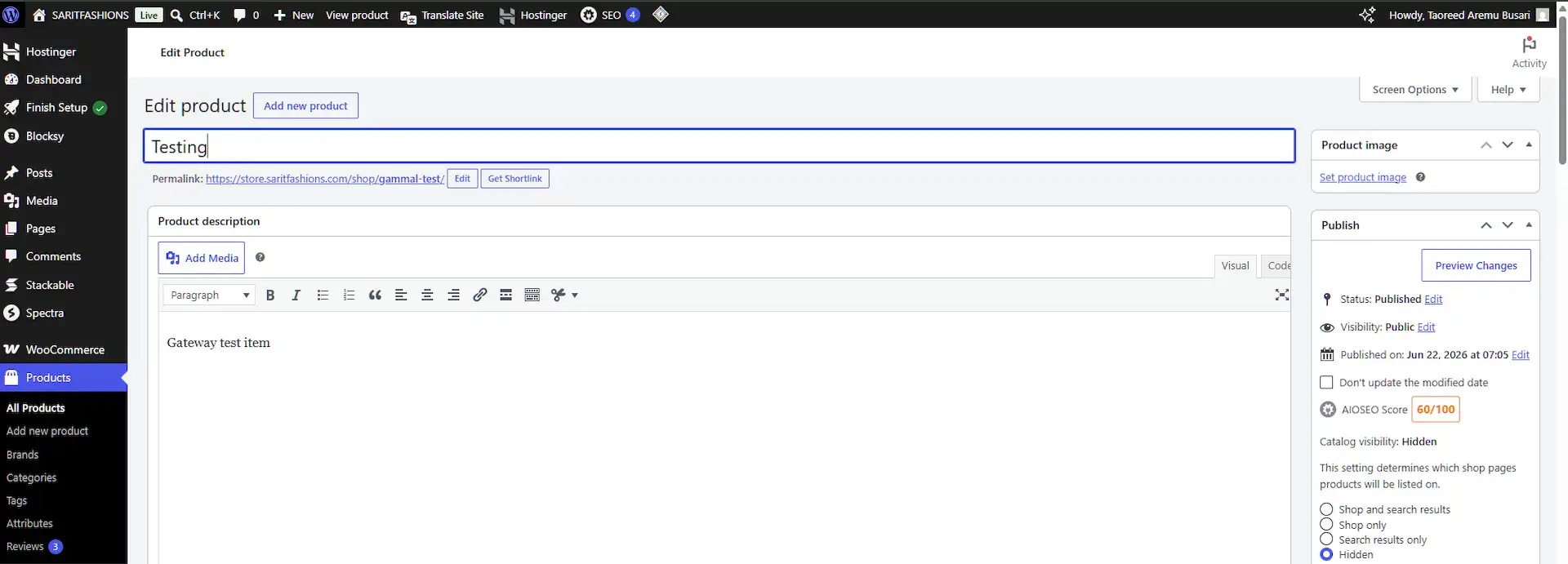
Generate the micro‑asset: Create a new product in your WooCommerce directory with an internal name (for example, “Testing”). Adjust the catalog visibility setting to “Hidden” so public search crawlers cannot reference the page. Set the price to a minimal live value, such as $1.00.
Execute the live checkout: Open an incognito browser window, navigate directly to the hidden product’s URL, and complete a live purchase using a valid consumer credit card.
Analyze the system readout:
- If your system stalls or displays a generic red banner, review your plugin logging directories immediately.
- If the processing loop succeeds, cross‑reference the incoming data logs against the four‑point structural audit layout detailed below.
4. REAL-WORLD LOCKDOWN STRATEGIES: DEPLOYING PROACTIVE OPERATIONAL CONTROLS
If your verification lookup reveals that your payment configuration has failed or encountered processing friction, you must immediately implement systemic fixes to rebuild the user pipeline before losing conversions.
Automated Status Webhooks
Status changes alone are insufficient. Activate encrypted, asynchronous webhook synchronization between your server and the payment gateway. Unlike REST polling — which often times out during high‑traffic spikes — cloud‑routed webhooks deliver instant, secure updates directly into your WooCommerce dashboard.
Verified Log Directories
Eliminate untraceable checkout bugs by assigning unique debug logging files to every gateway. Enable explicit debug tracking in plugin settings so your system automatically parses logs, isolates conflicts, and produces clear, human‑readable console outputs.
Product Asset Isolation
Prevent diagnostic tools from corrupting live data by using strict product filters. Test pipelines with hidden micro‑priced products, execute live minor‑value checkouts, and immediately refund transactions to keep analytics clean and unaffected.
Cash Flow Optimization
After validation, confirm settlement parameters match your routing numbers. Review automated tax strings and shipping tables to shield queries from localized misconfigurations.

SUMMARY ACTIONS FOR LONG‑TERM STORE INTEGRITY
Quarterly Gateway Audits — Test hidden checkout pages every 90 days, especially after major updates.
Zero Guesswork Policy — Treat unverified integrations as immediate risks; resolve flagged errors instantly.
Audit App Connections — Purge outdated API keys, unused extensions, and stale webhooks regularly.
BUILDING CONFIDENCE IN YOUR CHECKOUT
By mastering WooCommerce payment gateway testing, you eliminate checkout anxiety, protect conversions, and ensure every transaction flows securely. Remember — e‑commerce success is not just about design or marketing; it’s about transaction integrity and long‑term trust. Thank you for reading this guide. If you found it valuable, share it with fellow store owners and bookmark our site. Come back often to Saritsystech for more premium insights, tutorials, and expert knowledge on e‑commerce security, web development, and digital optimization.
Your blog post is always insightful and helpful. This is good especially your inclusion of informative images to deploy your explanations.